
Wildlife in Jasper National Park
Jasper National Park is home to elk, moose, caribou, mountain sheep and goats, as well as grizzly bears, black bears, wolves and cougars. Animals roam freely, so no sighting is guaranteed. You may see a few on a single day, or none.
Elk (wapiti) may turn up near roads and meadows around the town. If you want a guide who knows where to look, compare the Jasper wildlife and day tours. Bears, wolves and cougars need a lot more space than elk, and the rules below are set accordingly.
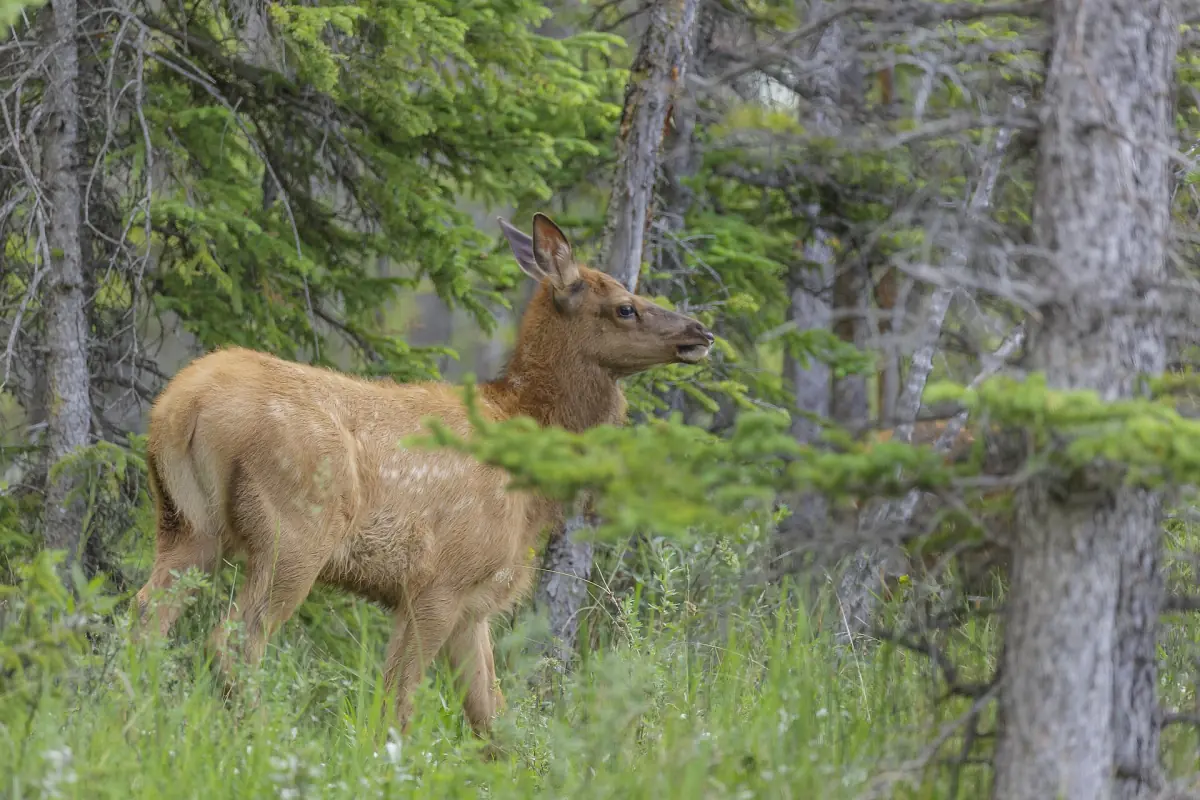
Our pick: a winter wildlife tour
A small-group bus tour with a nature guide in the cold season; no sighting is promised.
Hand-picked tours, booked through GetYourGuide. Prices are indicative starting prices in US dollars (as of October 2026). Tap a tour for live availability and the current price in your currency.
Jasper wildlife and sightseeing tours
Guided day trips with a chance to see animals along the way, with live prices and availability. Sightings are never guaranteed.
Viewing distances in 2026
The rules apply to roadside viewing within 400 m of public roads and other traffic areas.
| Animal | Minimum distance | What to do |
|---|---|---|
| Bear (grizzly or black) | 100 m | Stay in your vehicle or back away calmly. Carry bear spray and know how to use it |
| Wolf and cougar | 100 m | Keep a long distance. Never approach |
| Elk, moose, caribou | 30 m | Do not block the animal's path, even from farther away |
| Mountain sheep and goats | 30 m | Pull out of traffic. Do not stop in the road |
The order allows an exception for people who stay entirely inside a legally parked vehicle. Never feed, touch or approach an animal. For most visitors, the safest way to watch is from the car, with a camera with a long lens.
Elk rut and aggressive bulls
The elk rut runs from late summer until mid-October. Bulls can be aggressive during this time. Keep at least 30 m away, never step between a male and a female, and do not drive between them either.
Treat every elk as unpredictable, even the ones that seem used to people near the town.
Bears and caribou
Two animals that need special care.
Bears
Grizzly bears and black bears both live in the region. Carry bear spray where you can reach it, and know how to use it. Trails can close when a bear is nearby, so follow closure signs and do not enter closed areas.
Woodland caribou
Woodland caribou are classed as Threatened under the Species at Risk Act. A caribou sighting cannot be planned. Do not expect to see one on a drive or a hike.
Winter caribou closure
The Tonquin and À-la-Pêche backcountry areas are closed from 1 November 2026 to 15 May 2027, with access planned again on 16 May 2027. Check the Parks Canada map for the exact boundaries.
Photos
The distances apply when you take photos too. A zoom or long lens gets you close enough without a step closer. Do not block an animal's free movement, even from farther away.
Fines
Breaking the viewing order can lead to prosecution, with a maximum penalty of CA$25,000. That is a ceiling, not a fixed fee for every offense.
Jasper wildlife: frequently asked questions
What animals can I see in Jasper National Park?
Elk, moose, caribou, mountain sheep and goats, grizzly bears, black bears, wolves and cougars all live in the park. Seeing any of them is never guaranteed.
How close can I get to an elk?
Keep at least 30 m away. During the rut, until mid-October, bulls can be aggressive, so keep your distance and never get between a male and a female.
How far must I stay from a bear?
At least 100 m. Carry bear spray where you can reach it, and know how to use it.
Can I feed wildlife?
No. Never feed, touch or approach an animal. Breaking the viewing order can lead to prosecution with a maximum penalty of CA$25,000.
Can I see caribou?
Woodland caribou are classed as Threatened, and a sighting cannot be planned. Parts of the backcountry are closed to protect them in winter.